call for visit : +919772732488

Jaipur’s Drahyavati River Gets a New Lease on Life: JDA Takes Action Against Untreated Sewage
JDA takes action to stop untreated sewage flowing into Jaipur's Drahyavati River! New pipeline to divert excess waste to 100 MLD STP. Learn how this cleanup drive will restore the river. Full details & FAQs.
3/27/20266 min read
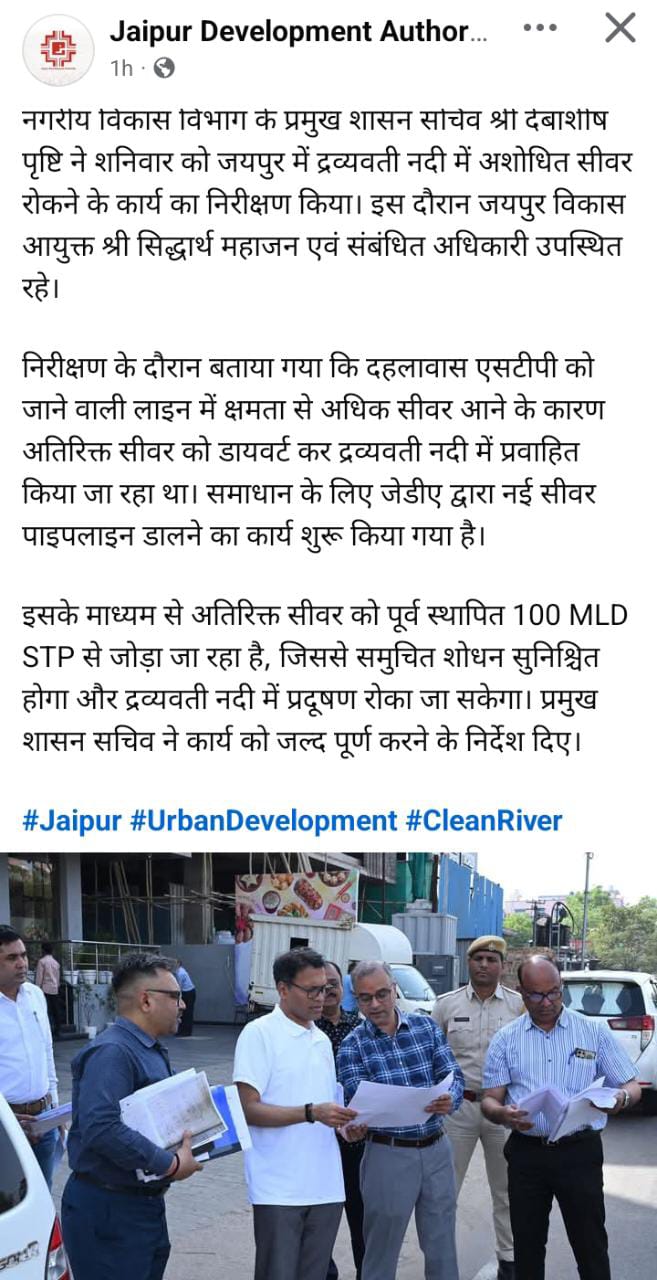
There is something deeply unsettling about seeing a river reduced to a drain. For years, residents of Jaipur have watched the Drahyavati River (also known as Dravyavati) struggle under the weight of urbanization. What was meant to be a natural waterway flowing through the Pink City became, for a long time, a dumping ground for untreated sewage and industrial waste.
But change is finally on the horizon.
In a significant move to restore the river’s health and stop the flow of pollutants, top officials of the Jaipur Development Authority (JDA) conducted a site inspection over the weekend. The focus was a critical issue: the diversion of excess untreated sewage into the Drahyavati River due to capacity constraints in the existing sewerage system.
For those living near the river or anyone who cares about Jaipur’s environment, this development is not just another bureaucratic exercise. It is a promise of cleaner water, better health, and a more sustainable future for the city.
Let’s dive into what happened during the inspection, what the root cause of the problem was, and how the JDA plans to fix it once and for all.
The Inspection: Authorities Take Note
On Saturday, the Principal Secretary of the Urban Development Department, Shri Abhishek (as mentioned in the summary), conducted a thorough inspection of the Drahyavati River. He was accompanied by the JDA Commissioner, Shri Siddharth Mahajan, along with other senior officials from the department.
The inspection wasn’t just a casual visit. It was a focused effort to identify the exact points where untreated sewage was entering the river and to review the progress of ongoing remedial measures. The presence of such high-ranking officials signals that this issue has finally been prioritized at the highest levels of the state government.
During the inspection, officials presented a candid assessment of the situation. They identified a critical bottleneck: the sewer line feeding the Dhalawas Sewage Treatment Plant (STP) was receiving more sewage than it could handle.
Understanding the Problem: Why Was Sewage Flowing into the River?
To understand the solution, we must first understand the problem. Jaipur’s sewerage network is vast and complex, designed to carry wastewater from homes and industries to treatment plants where it is cleaned before being released into the environment.
The specific issue uncovered during the inspection was this:
The Dhalawas STP line was receiving sewage beyond its designed capacity.
When a sewer line is overwhelmed, the excess untreated sewage has to go somewhere. To prevent backflow into residential areas or complete system failure, the excess was being diverted—and that diversion led directly into the Drahyavati River.
This meant that for some time, untreated or partially treated sewage was flowing into the river, contributing to the foul smell, dark color, and health hazards that residents have long complained about.
It was a classic case of infrastructure struggling to keep up with the city’s rapid population growth. As Jaipur expands, the volume of sewage increases, and the existing treatment capacity sometimes falls short.
The Solution: A New Pipeline to Tap Into Existing Capacity
The good news is that the JDA didn’t just identify the problem; they already have a solution in motion. During the inspection, officials briefed the Principal Secretary on the corrective measures being implemented.
The key intervention is the installation of a new sewer pipeline. This pipeline is designed to:
Divert the excess sewage that was previously being dumped into the river.
Connect it to an existing 100 MLD (Million Liters per Day) Sewage Treatment Plant.
By tapping into this additional treatment capacity, the excess sewage will no longer need to be released untreated into the Drahyavati. Instead, it will flow to the STP, undergo proper treatment, and be discharged as clean, safe water.
This approach is smart for two reasons:
It utilizes existing infrastructure rather than waiting for a completely new plant to be built, which would take much longer.
It provides immediate relief by stopping the pollution at the source while long-term capacity expansion plans are developed.
The Bigger Picture: Reviving the Drahyavati River
The Drahyavati River project is one of Jaipur’s most ambitious urban rejuvenation initiatives. For years, the river was neglected—encroached upon, polluted, and reduced to a narrow, filthy drain. However, in recent years, the JDA has undertaken a massive project to revive it, including constructing embankments, developing riverfronts, and beautifying the banks.
But all that beautification work is cosmetic if the water flowing through it remains polluted. The true revival of the river depends entirely on stopping the inflow of untreated sewage. That is why this intervention at the Dhalawas STP line is so critical.
When the new pipeline becomes operational and the excess sewage is fully diverted to the 100 MLD STP, the quality of water in the Drahyavati will improve significantly. Cleaner water means:
Reduced stench in surrounding neighborhoods.
Lower health risks for residents living near the river.
A thriving ecosystem where aquatic life can return.
A true riverfront that residents can be proud of.
Read Blog :- Jaipur Traffic Makeover: Sikar Road & New Saganer Road to Go Signal-Free
FAQ: Your Questions Answered
Here are some frequently asked questions to help you better understand this development and its implications for Jaipur.
Q1. What is the Drahyavati River?
A: The Drahyavati River (also spelled Dravyavati) is a seasonal river that flows through Jaipur. For decades, it was neglected and heavily polluted. In recent years, the JDA has undertaken a major rejuvenation project to restore it, including developing riverfronts, parks, and walkways along its banks.
Q2. What was the problem identified during the inspection?
A: Officials discovered that the sewer line feeding the Dhalawas Sewage Treatment Plant (STP) was receiving more sewage than its capacity. To prevent system failure, the excess untreated sewage was being diverted and flowing into the Drahyavati River, causing pollution.
Q3. Who conducted the inspection?
A: The inspection was led by the Principal Secretary of the Urban Development Department, Shri Abhishek, along with JDA Commissioner Shri Siddharth Mahajan and other senior officials.
Q4. How is the JDA planning to stop the pollution?
A: The JDA has started laying a new sewer pipeline. This pipeline will divert the excess sewage that was previously going into the river and connect it to an existing 100 MLD Sewage Treatment Plant. This will ensure that all sewage is properly treated before being released.
Q5. What is an STP, and what does 100 MLD mean?
A: STP stands for Sewage Treatment Plant. It is a facility where wastewater is treated to remove contaminants before it is released into the environment. 100 MLD means the plant has the capacity to treat 100 million liters of sewage per day.
Q6. Will this completely clean the Drahyavati River?
A: Stopping the inflow of untreated sewage is the single most important step in cleaning any river. This intervention addresses a major source of pollution. Combined with ongoing rejuvenation work, it will lead to a significant improvement in water quality. However, maintaining cleanliness will require continued vigilance and preventing future dumping.
Q7. When will the work be completed?
A: During the inspection, the Principal Secretary directed officials to complete the work at the earliest. While an exact timeline wasn’t specified in the summary, such projects are typically expedited when top authorities are personally monitoring progress.
Q8. How does this affect residents living near the river?
A: Residents living along the Drahyavati have long suffered from foul odors, mosquitoes, and health issues due to the polluted water. Once the sewage diversion is complete, these problems are expected to reduce significantly. Cleaner water also means a more pleasant environment for walking, recreation, and daily life.
Q9. Is the JDA doing anything else to improve the river?
A: Yes. The Drahyavati River rejuvenation project is a comprehensive effort. Apart from stopping sewage inflow, it includes:
Construction of embankments to prevent erosion.
Development of landscaped riverfronts and parks.
Creation of walking and cycling tracks.
Beautification of bridges and public spaces along the river.
Q10. What can citizens do to help?
A: While the government handles infrastructure, citizens play a crucial role. Here’s how you can help:
Avoid dumping garbage or construction waste into the river or drains.
Report illegal sewage connections to the JDA Plot in Jaipur or local municipal authorities.
Conserve water—less water used means less wastewater generated.
Support and participate in local cleanliness drives and awareness campaigns.
Final Thoughts: A Step in the Right Direction
The sight of senior officials personally inspecting the Drahyavati River and addressing the root cause of pollution is a positive sign. It shows that the administration is moving beyond cosmetic fixes and tackling the hard, unglamorous work of fixing the city’s underground infrastructure.
For the people of Jaipur, this means hope. Hope that the river running through their city will no longer be a source of shame but a source of pride. Hope that the investments made in beautification will actually translate into a cleaner, healthier environment.
The new pipeline connecting excess sewage to the 100 MLD STP is a technical solution to a very human problem. When completed, it will ensure that the water flowing in the Drahyavati is treated, safe, and worthy of the city it runs through.
As the work progresses, residents can look forward to a transformed riverfront—one where families can walk without holding their noses, where children can play without fear of contamination, and where Jaipur truly embraces its vision of sustainable urban development.
Stay tuned for more updates on Jaipur’s infrastructure and environmental initiatives. Every clean river starts with one step—and Jaipur is taking it.
Important Links
Your trusted partner in real estate solutions.
Contact
Reach us
info@jaipurdreamhomes.com
+91-9351185960
© 2024. All rights reserved.
Gulshan Nama
Sandeep Patodiya
Designed & Developed by Gossips Marketing (Digital Marketing Service Provider)