call for visit : +919772732488

Things To Do In Jaipur
Let's Know Things To Do In Jaipur. Plan your perfect Jaipur trip in 2026 with this detailed travel guide covering top attractions like Amer Fort and Hawa Mahal, cultural experiences, local food spots, shopping bazaars, hidden gems, safari adventures, safety tips, and a practical 2–3 day itinerary for first-time visitors.
2/26/20269 min read
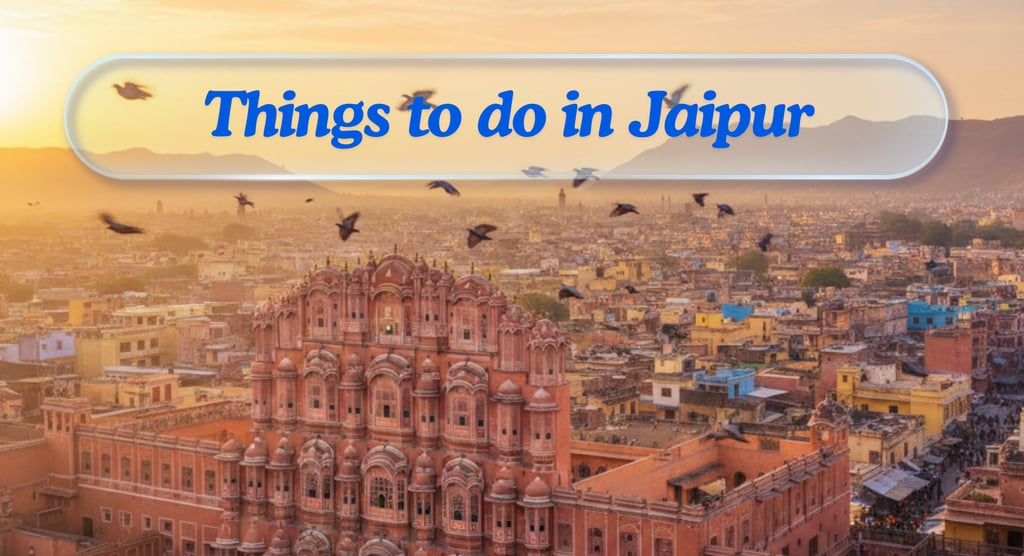

Things to do in Jaipur
Jaipur’s historic “Pink City” glare with palaces, forts and observatories. At the heart is Amber (Amer) Fort, a hilltop palace overlooking Maota Lake. This UNESCO World Heritage site (part of Rajasthan’s “Hill Forts” inscription) is famed for its grand courtyards and mirror-filled Sheesh Mahal. It’s best seen early in the morning to avoid crowds and heat. Nearby is Jaigarh Fort (home to the massive Jaivana cannon) and Nahargarh Fort on the ridge – both offer spectacular city views at sunset. Another must-see is the City Palace in old Jaipur, a sprawling complex of courtyards and museums. Its main gate stands in the old city near the Hawa Mahal, Jaipur’s signature “Palace of Winds” a 1799 pink sandstone façade full of latticed windows. You don’t need to pay to enter Hawa Mahal; instead grab a photo of its honeycomb façade from a nearby rooftop. Across the street lies Jantar Mantar, an early-18th-century royal observatory. This UNESCO World Heritage site houses nearly 20 giant stone instruments to chart the sky. Finally, the Jal Mahal is a water palace afloat on Man Sagar Lake – especially beautiful at dusk when it is illuminated and reflected in the water. (Note: Jal Mahal is mostly viewed from shore.) Other notable sights include the Birla Mandir white-marble temple and Albert Hall Museum, both elegantly lit after dark.
Unique & Fun Activities in Jaipur
Beyond monuments, Jaipur offers unique experiences. Hot Air Balloon Ride: Float at dawn over Amber Fort and the Aravalli hills on a balloon safari. Companies like SkyWaltz run sunrise flights (mostly Oct–Apr) for panoramic views of the city and countryside.
Elephant Village (Hathi Gaon): Jaipur’s Elephant Village near Amber Fort is a 30.5-hectare sanctuary for elephants and their caretakers (mahouts). Here visitors can feed or wash the elephants, even paint or ride them. (Be aware the ethics of elephant rides are debated: many travelers and guides discourage riding elephants due to welfare concerns.)


Cultural Shows (Chokhi Dhani): For Rajasthani culture, spend an evening at Chokhi Dhani, a “village resort” 15 km south of Jaipur. It recreates a traditional desert village atmosphere with folk dancers, puppet shows, magicians, camel and elephant rides, plus a lavish Rajasthani dinner. Lantern-lit sand floors and peacock-throne seating add to the charm.
Folk Performances: Many hotels and venues (especially during festivals) also host folk dance and music shows.
Nightlife: Jaipur has a surprisingly lively bar and club scene. Popular nightspots include Forresta, Bar Palladio (the famous blue Italian courtyard bar), Native, Sante, Dyore and Sambre, among others. A new place called Purgatory777 is also a trendy nightclub/bar. Note that most Jaipur clubs end music by 1–2 AM. Afterward, many head up to Nahargarh Fort or Gulab Ji Ka Kua (the historic stepwell) for chai and a sunrise view.
Street Shopping: Evening markets have a fun atmosphere. Explore Johri Bazaar (jewelry, kundan and meenakari goldwork) and Bapu Bazaar (textiles and leather goods) under the night lights. Sample street snacks like kachori or kulfi from sidewalk vendors between stalls.
Adventure & Other Fun: For adrenaline, try go-karting at The Pink Falcon track in Pink City. (One Reddit traveler enthused: “Go to The Pink Falcon go-karting…you can have lunch while racing”.) Birders can visit Jal Mahal Bird Sanctuary below Nahargarh. Offbeat travelers might also check out hidden gems like the Panna Meena stepwell or explore the artisan workshops of the old city.
Shopping in Jaipur
Jaipur is a shopper’s paradise for handicrafts and textiles. Johari Bazaar is famous for gemstone jewelry (particularly the local kundan and meenakari styles). Bapu Bazaar and Tripolia Bazaar are must-sees for fabrics: you’ll find vivid Bandhani tie-dyed and block-printed textiles, as well as cotton quilts, leather juttis (traditional shoes) and bags. Bring your bargaining skills – vendors often expect it. (As one guide suggests, “the first price is a joke…start by offering about half”.)
Other noted markets include Tripolia Bazaar (lac bangles and metal crafts), Sireh Deori Bazaar (Jaipuri quilts and home décor), and Kishanpole (wood furniture, marble statuary, embroideries). For blue-glazed pottery, visit the Jaipur Blue Pottery Art Centre, or look for shop signs in Johri or Bapu Bazaar selling blue pottery dinnerware.
What to Buy: Iconic Jaipur souvenirs include tie-dye Bandhani fabrics, block-printed scarves and dupattas, silver anklets, lac bangles, and blue pottery pieces. Don’t miss the famously soft Jaipuri quilts. An excellent one-stop shop is the Anokhi Museum store, which sells high-quality block-printed textiles (though prices are fixed).
Best Food & Restaurants in Jaipur
Rajasthani cuisine is rich and flavorful. Street stalls and sweet shops are part of Jaipur’s charm. Snacks: The city’s most famous snack is pyaz ki kachori – a flaky, onion-stuffed pastry. Head to Rawat Mishthan Bhandar in Old City, a local institution, for piping-hot kachoris. Don’t leave without trying their jalebis or mirchi vadas too. Another classic is Ghevar, a disc-shaped sweet popular in summer. Thali Meals: For a hearty meal, try a traditional Rajasthani thali (dinner platter). A thali features dal (lentils), baati (baked wheat balls), churma (sweet crumbled wheat), various veggie curries, and pickles. Chokhi Dhani serves an authentic thali in a rustic setting, and there are specialized thali restaurants (like Thali House) known for generous portions. Rajasthani vegetarian specialties include gatte ki sabzi (gram-flour dumplings in curry) and ker sangri (spicy desert beans).
Restaurants: Many hotels and cafes have rooftop views. Popular picks include Peacock Rooftop Restaurant (known for paneer tikka and butter chicken), 1135 AD inside Amber Fort, and Bar Palladio at Narain Niwas Palace (for ambience). For fine dining, try Suvarna Mahal at ITC Rajputana or Suvarna Mahal at Rambagh Palace. Street-food lovers should not miss LMB (Laxmi Mishthan Bhandar) for dal-baati and sweets, and Shop near Albert Hall for samosas and chaat. Late-night eateries and 24-hour cafés (e.g. Tapri Central) serve chai and quick bites in the evening.
Jaipur Travel Guide
Best Time to Visit: Jaipur’s peak season is winter (October through March). The weather is cool and sunny (daytime 15–28 °C), making sightseeing comfortable. The world-famous Jaipur Literature Festival takes place every January and draws authors and visitors from around the globe – a wonderful time for booklovers. Monsoon (July–Sept) sees fewer tourists and lush scenery, but expect brief heavy rains. Summers (April–June) are very hot (35–45 °C), so if you travel then, plan early starts and stay hydrated.
Jaipur in 1–2 Days: In two days you can cover the highlights. Day 1: Wake early for Amber Fort (beating the crowds), then visit nearby Jaigarh or Nahargarh Fort for city views. In the afternoon see the City Palace and Jantar Mantar in the Old City. Wrap up with the Hawa Mahal (photograph from the street or a café rooftop). Day 2: Shop in the colorful bazaars (Johari and Bapu), taste local snacks, then visit Gaitore royal cenotaphs or Birla Temple. End your trip with sunset at Nahargarh (spectacular views) or attend an evening sound-and-light show at Amber Fort. If pressed for just one day, skip Jal Mahal (it’s mainly photo-op) and focus on Amber Fort, Nahargarh sunrise or sunset, and one palace/observatory.
Jaipur on a Budget: To save, consider the Composite Ticket – a 2-day pass covering Amber, City Palace, Jantar Mantar and other sites. Ride-share apps (Ola/Uber) are recommended for auto-rickshaws; they give fair flat rates and save the hassle of bargaining. Eat like a local at dhabas (roadside eateries) for inexpensive thalis and chai.
For Couples: Jaipur offers romantic spots. Watch the sunset together from Nahargarh Fort or at the elegant Vidyadhar Garden. Stroll the bazaars in the cooler evenings, and dine on a rooftop terrace under the stars. Heritage hotels like Samode Haveli or Rambagh Palace (with its The Verandah restaurant) are popular for couples. Visit the tranquil Govind Dev Ji Temple or Gaitore Cenotaphs (which turn pink at dusk) for a cultural touch.
For Families: Kids love the open spaces of City Palace (with its puppet shows and armory displays) and Amber Fort’s maze-like courtyards. Chokhi Dhani is great for families – the performances, playground and animal rides keep children entertained. The Jaipur Zoo (near Galtaji) and the educational Albert Hall Museum (with its elephant copper statue) are other family-friendly stops. The Jal Mahal water palace is lovely for a short visit, and Saras Mandir gardens have camel rides and playgrounds.
Jaipur Weekend Itinerary: A long weekend can include Jaipur plus a nearby excursion. Spend the first two days in Jaipur as above, then on day 3 take a day trip to Ajmer–Pushkar or Ranthambore. Ajmer (3 h drive) has the famous Dargah Sharif shrine, while nearby Pushkar is known for its Brahma Temple and holy lake. Ranthambore (3–4 h away) is India’s premier tiger reserve – book a morning jeep safari to (with luck) see wild tigers, leopards and more. Other getaway options include Sariska Wildlife Sanctuary or visiting the painted havelis of Shekhawati (a 4–5 h drive).
Nearby Places to Visit from Jaipur
Ajmer & Pushkar: About 130 km from Jaipur, Ajmer is a Muslim pilgrimage city famed for the Ajmer Sharif Dargah. Only 10 km further is Pushkar, a sacred Hindu town on a lake with India’s only Brahma Temple. Pushkar’s annual Camel Fair (Nov) is a cultural spectacle.
Ranthambore National Park: ~180 km away (3–4 h drive), this tiger reserve offers jeep safaris to spot Bengal tigers, leopards, wild boar and deer in a jungle setting.
Sariska Tiger Reserve: ~150 km from Jaipur, another park with tigers, leopards and the historic Kankwari Fort.
Shekhawati Region: The painted havelis of Mandawa or Nawalgarh (3–4 h drive) showcase colorful frescoes and traditional Rajasthani architecture.
Neemrana Fort: Just outside Delhi on the way back, Neemrana Fort Palace is a 15th‑century fort converted into a luxury hotel – perfect for a mid-week getaway or brunch stop.
Frequently Asked Questions
Q: What are the must-see attractions in Jaipur for a 2-day trip?
A: The consensus travel itineraries emphasize the three forts and the city palaces. Day 1 typically starts at Amer Fort (arrive by 8 AM to beat crowds), then move on to Jaigarh or Nahargarh Fort. In town, visit the City Palace and its museum, walk across to Jantar Mantar (astronomical observatory), and snap pictures of the Hawa Mahal from nearby rooftops. Day 2 can focus on shopping and more sights: explore Johari and Bapu Bazaars, check out Jal Mahal (water palace) at dusk, and end at Nahargarh Fort for sunset (locals say the city looks best at night from here). If short on time, skip Jal Mahal (it’s mainly photogenic) and be sure to catch Nahargarh’s panorama.
Q: What unique experiences should I try in Jaipur?
A: Don’t miss taking a dawn hot-air balloon flight over the desert and forts. Experiencing an authentic Rajasthani village evening at Chokhi Dhani (with folk dances, puppet shows and a thali meal) is also highly recommended. For adventure, consider the Pink Falcon go-kart track or a morning safari in Jhalana Leopard Reserve just outside Jaipur, which is home to 30+ leopards. Some visitors opt for the Elephant Village (Hathi Gaon) tour, where you can feed or wash elephants – however, many guides advise against elephant rides due to animal welfare concerns.
Q: Where are the best places to shop in Jaipur?
A: The top markets are Johari Bazaar (for jewelry – kundan, meenakari and gems) and Bapu Bazaar (for textiles and leathers). Also explore Tripolia Bazaar for colorful lac bangles, Sireh Deori for quilts and home crafts, and Kishanpole Bazaar for textiles and woodwork. Street stalls here sell Bandhani tie-dye fabrics, block-printed cloth, blue pottery, mirror work and camel-leather goods. A useful tip: bargaining is expected – start by offering about half the initial price. If in doubt, the Anokhi store (near City Palace) has guaranteed-quality prints (at fixed prices).
Q: What local foods should I try in Jaipur?
A: Rajasthani cuisine is famously vegetarian and spicy. Be sure to try a dal-baati-churma meal (lentils, baked wheat balls and sweet crumbled wheat), and a plate of gatte ki sabzi (gram-dumplings in gravy) or ker sangri (spiced desert beans). Jaipur’s street specialty is the pyaz ki kachori (fried onion pastry); head to Rawat Mishthan Bhandar for the best ones. For sweets, taste ghewar or kulfi. Finish your meal with a lassi (yogurt drink) or paan (spiced betel leaf). Popular restaurants include Peacock Rooftop (good for north Indian dishes) and the buffet thali at Chokhi Dhani. Rawat and Laxmi Mishthan Bhandar are legendary for kachoris and rasgullas.
Q: When is the best time of year to visit Jaipur?
A: The ideal season is October through March, when the weather is pleasant. January hosts the Jaipur Literature Festival – perfect if you love books. Monsoon (July–Sept) is off-season (fewer crowds, lush landscapes) but roads may be wet. Avoid April–June heat if possible; daytime highs can exceed 40 °C.
Q: Is Jaipur safe and easy to get around?
A: Jaipur is generally safe for tourists. For transport, use Ola or Uber autos – these ride-hailing apps have fixed fares and avoid taxi haggling. Taxis and cycle-rickshaws can also be hired, but agree the fare in advance. Traffic can be heavy, so plan accordingly.
Q: What should couples and families do differently in Jaipur?
A: Couples often enjoy romantic spots like Nahargarh Fort at sunset or a quiet dinner on a heritage hotel terrace. They might skip kids’ attractions and focus on cultural sites or shopping. Families with children might prioritize the City Palace (which has puppet shows), Amber Fort and Chokhi Dhani for its many kid-friendly activities. Either way, try to beat the heat with early mornings or late afternoons.
Q: How far are Ranthambore and Ajmer from Jaipur?
A: Ranthambore Tiger Reserve is about 180–200 km from Jaipur (roughly a 3–4 hour drive). Ajmer is about 130 km (2–3 hours); Pushkar is ~10 km beyond Ajmer. Both make doable day trips. (Answers compiled from travel guides and local tips.)
Sources: Authoritative travel guides and local experts have been cited throughout, including UNESCO and travel sites, and firsthand tips from Jaipur residents and travelers on forums, Reddit and blogs. These provide up-to-date, insider insights on what to see and do in Jaipur.
Important Links
Your trusted partner in real estate solutions.
Contact
Reach us
info@jaipurdreamhomes.com
+91-9351185960
© 2024. All rights reserved.
Gulshan Nama
Sandeep Patodiya
Designed & Developed by Gossips Marketing (Digital Marketing Service Provider)