call for visit : +919772732488

Kapoorawala Village Jaipur: Narasimha Temple Story & Legacy Behind the Name 2026
Explore Kapoorawala village's charming history near Jaipur – from Kapurchand's legacy to its ancient Narasimha temple. Village life, traditions, population facts & connection to growing jaipur property trends in 2026.
2/25/20263 min read
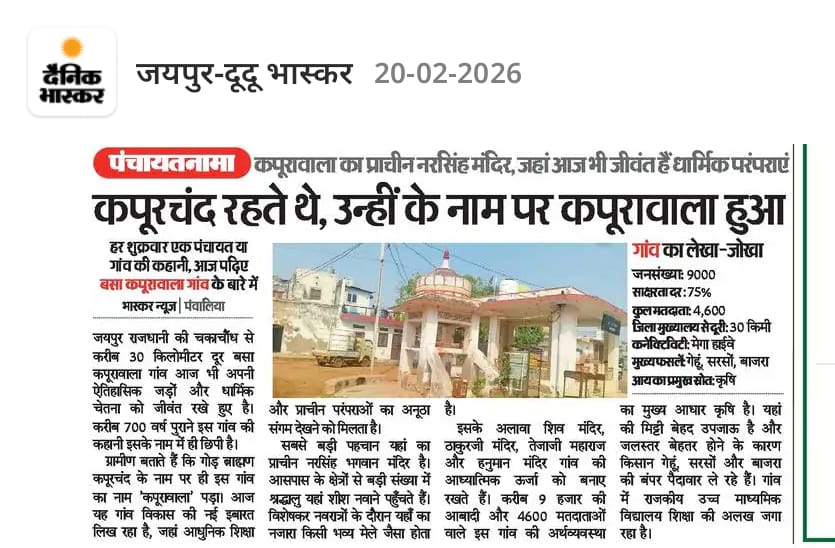
Jaipur’s nearby village Kapoorawala has a rich story of faith, history, and changing times. This blog shares the simple, human tale behind the name of the village, its famous Narasimha temple, and how people here are keeping old traditions alive.
Where Is Kapoorawala Village?
Kapoorawala is a village in Sanganer tehsil of Jaipur district, Rajasthan, around 30 km from the main city on the Chaksu road side. As per Census 2011, it has about 2,403 people and 376 families, with a good literacy rate and a strong farming background.
The Dainik Bhaskar report dated 20 February 2026 says the village is now known for its old Narasimha temple and its living religious culture. Local people still follow traditional rituals, fairs, and festivals that bring the entire village together.
How Kapoorawala Got Its Name
According to the news piece, the village was earlier just another small settlement near Jaipur, but a respected elder named Kapurchand lived here decades ago. He was known for helping people, settling disputes, and supporting social and religious activities in the area.
Over time, people began referring to the place as “Kapurchand ka wala,” and slowly it turned into “Kapoorawala.” This story is similar to how many Indian villages are named after a key family or leader, and the village still takes pride in this simple origin.
The Ancient Narasimha Temple of Kapoorawala
The heart of the village is the old Narasimha temple, shown in the centre photo of the news clipping. This temple is considered very ancient by locals, and the structure follows a simple Rajasthani style with a small dome, open verandah and flag on top.
Villagers believe that their Narasimha temple protects the village from calamities and brings good harvests. On special days like Narasimha Jayanti and other Hindu festivals, people from nearby villages also come here for darshan, aarti, and prasad.
Living Traditions and Religious Life
The report mentions that even today traditional values are strong in Kapoorawala. Morning and evening aarti, bhajan, and community langar or bhandara are common during festivals and temple events.
Young people participate in these rituals along with elders, which is rare in many modern villages now. The village also celebrates other festivals around the temple, making it a social and cultural hub, not just a religious place.
Read Blog :- JDA Adity Vihar Plots Possession After 11 Years
Basic Facts About the Village
Along with the story, the newspaper gives a small info box about the village. Some key points match government census data:
Population: Around 2,400–2,500 people.
Literacy: Roughly three-fourths of the population can read and write, with male literacy above 90% and female literacy above 60%.
Main work: Cultivation and other rural jobs, with nearly 954 main workers including farmers and labourers.
These figures show that though it is a traditional village, Kapoorawala is gradually moving ahead in education and development.
Why This Story Matters Today
Stories like Kapoorawala’s remind us that not all progress is about malls and high‑rises. Even when jaipur property prices rise and city limits expand, small villages nearby still carry deep history and living culture.
At the same time, development around Jaipur, including roads and future town planning, will slowly connect villages like Kapoorawala even more. For some families, this mix of old traditions and new opportunities can be as valuable as owning modern jda plots in jaipur.
The Dainik Bhaskar article is part of a series where every Friday they highlight one panchayat or village, and Kapoorawala’s turn shows how a single person’s legacy, a temple, and a close‑knit community can define a whole place.
FAQ: Kapoorawala Village and Its Narasimha Temple
Q1. Where exactly is Kapoorawala village located?
Kapoorawala lies in Sanganer tehsil of Jaipur district, Rajasthan, about 30 km from Jaipur city on the road towards Chaksu side.
Q2. How did Kapoorawala get its name?
The village is said to be named after a respected elder, Kapurchand, who used to live here; over time “Kapurchand wala” became “Kapoorawala.”
Q3. What is special about the Narasimha temple in Kapoorawala?
It is an old village temple of Lord Narasimha where rituals, aarti, and festivals still follow traditional customs, drawing devotees from nearby areas.
Q4. How many people live in Kapoorawala?
As per Census 2011, the village has around 2,403 residents in about 376 households, with a fairly good literacy rate.
Q5. What do most people in the village do for a living?
Most families depend on agriculture and related rural work, with a mix of cultivators, labourers, household industry workers and other small jobs.
Q6. Is Kapoorawala well connected to Jaipur?
Yes, it is connected by road through the Sanganer–Chaksu side, and as Jaipur grows, road and transport links are expected to improve further.
Q7. Are there any other famous temples or sites near Kapoorawala?
Jaipur district has many historic temples, and several devotees visiting bigger temples in the city also stop at local shrines like this Narasimha temple while travelling.
Q8. Why did the newspaper feature Kapoorawala?
Dainik Bhaskar runs a weekly “Panchayatnama” column that tells the story of one village each week; Kapoorawala was featured because of its history, its Narasimha temple, and the legacy of Kapurchand.
Important Links
Your trusted partner in real estate solutions.
Contact
Reach us
info@jaipurdreamhomes.com
+91-9351185960
© 2024. All rights reserved.
Gulshan Nama
Sandeep Patodiya
Designed & Developed by Gossips Marketing (Digital Marketing Service Provider)